Have you ever seen the words booze vs boos and wondered whether they are related?
They look almost identical, but they have completely different meanings
. One is an informal word connected with alcohol, while the other can describe expressions of disapproval or more than one “boo.”
The confusion usually comes from their similar spelling and pronunciation.
Understanding booze vs boos is useful for students, ESL learners, writers, and anyone who wants to communicate clearly in English.
Although both words are common in casual conversations, social media, entertainment, and everyday writing, they cannot normally be used interchangeably.
In this guide, we will explain their meanings, grammar, differences, examples, common mistakes, and simple memory tricks so you can confidently choose the right word.
Quick Answer
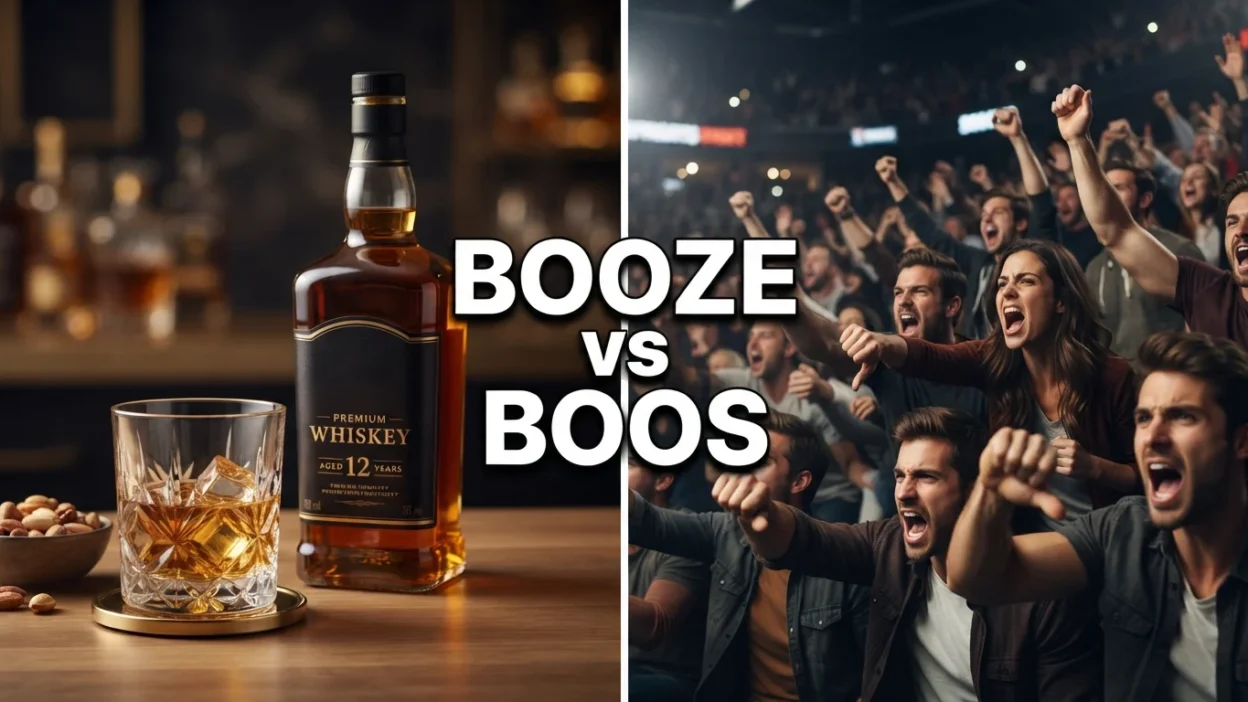
Booze means alcoholic drinks or alcohol in general. It is an informal noun and can also be used as a verb meaning to drink alcohol.
Boos is the plural of “boo” or the third-person singular form of the verb “boo.” It usually refers to sounds showing disapproval or rejection.
Easy rule: Booze = alcohol. Boos = sounds of disapproval or plural “boo.”
What Does “Booze” Mean?
Booze is an informal English word for alcoholic drinks or alcohol. It can refer to beer, wine, spirits, cocktails, or alcoholic beverages generally.
For example:
- “There was plenty of booze at the party.”
- “He decided to stay away from booze.”
- “They bought some booze for the celebration.”
The word is generally casual rather than formal. In professional, academic, or official writing, terms such as alcohol, alcoholic beverages, or alcoholic drinks are usually more appropriate.
Booze as a Noun
As a noun, booze refers to alcohol.
“They brought some booze to the barbecue.”
Here, “booze” is an uncountable noun, so we generally do not say “a booze” when referring to alcohol in general.
Booze as a Verb
Booze can also function as a verb meaning to drink alcohol, usually in an informal context.
“They spent the evening boozing with friends.”
The verb is casual and can sometimes suggest drinking heavily.
What Does “Boos” Mean?
Boos has a completely different meaning. It is usually the plural form of boo, a sound or expression used to show disapproval, dislike, or disagreement.
For example:
“The player received boos from the crowd.”
In this sentence, boos means sounds made by people who were unhappy with the player’s performance.
The word can also be the third-person singular form of the verb boo:
“The audience boos whenever the politician appears.”
Here, “boos” means that the audience expresses disapproval.
Booze vs Boos: Main Difference
The easiest way to understand booze vs boos is to focus on their meanings.
| Word | Meaning | Part of Speech | Example |
|---|---|---|---|
| Booze | Alcohol or alcoholic drinks | Noun / Verb | “They bought some booze.” |
| Boos | Sounds of disapproval | Noun / Verb | “The singer heard boos.” |
| Boo | A sound showing disapproval or surprise | Noun / Verb | “The crowd began to boo.” |
| Booze | To drink alcohol | Verb | “They were boozing all night.” |
In short, booze relates to alcohol, while boos relates to disapproval or the plural form of “boo.”
Grammar Forms of Booze and Boos
Understanding their grammatical forms can make the distinction even easier.
| Word/Form | Grammar | Meaning | Example |
|---|---|---|---|
| Booze | Noun | Alcohol | “He avoids booze.” |
| Booze | Verb | Drink alcohol | “They sometimes booze on weekends.” |
| Boozed | Verb, past tense | Drank alcohol | “He boozed too much.” |
| Boozing | Present participle | Drinking alcohol | “They were boozing at the party.” |
| Boo | Noun | A sound of disapproval | “The actor heard a boo.” |
| Boo | Verb | To express disapproval | “Fans booed the referee.” |
| Boos | Plural noun / verb | Multiple disapproving sounds / third-person verb | “The crowd boos loudly.” |
| Booed | Past tense | Expressed disapproval | “Fans booed the decision.” |
| Booing | Present participle | Expressing disapproval | “The audience was booing.” |
Examples of “Booze” in Everyday English
Because booze is informal, you are most likely to see it in casual conversations, entertainment, social media posts, and informal articles.
Example 1: Party
“We need to buy some booze before the party.”
Here, “booze” simply means alcoholic drinks.
Example 2: Social Conversation
“I don’t drink much booze anymore.”
The speaker is referring generally to alcohol.
Example 3: Travel
“The hotel has strict rules about bringing booze into the pool area.”
The word refers to alcoholic beverages.
Example 4: Lifestyle
“She decided to give up booze for a month.”
Here, “booze” means alcohol generally.
Example 5: Verb Usage
“They were boozing with their friends after the concert.”
Here, “boozing” means drinking alcohol.
Examples of “Boos” in Real Life
Boos commonly appears when talking about sports, concerts, politics, theater, competitions, and public performances.
Sports
“The referee was met with loud boos after the controversial decision.”
The crowd is expressing disapproval.
Entertainment
“The actor received boos after making the announcement.”
The audience reacted negatively.
Politics
“The politician was greeted with boos during the speech.”
The audience showed disagreement.
Theater
“The performer expected applause but heard boos instead.”
Here, “boos” means negative audience reactions.
Online Discussions
“The new decision received plenty of boos from fans.”
The word is being used figuratively to describe strong disapproval.
Booze vs Boos in Different Industries
The two words appear in different contexts, and understanding those contexts helps prevent mistakes.
| Context | Booze Usage | Boos Usage |
|---|---|---|
| Hospitality | Alcoholic drinks | Rarely used |
| Restaurants | Informal term for alcohol | Rarely used |
| Sports | Sometimes used casually | Very common for crowd reactions |
| Entertainment | May refer to alcohol | Common for audience reactions |
| Politics | Informal reference to alcohol | Common for public disapproval |
| Education | Usually avoided in formal writing | Possible when discussing audience reactions |
| Business | Informal only | Possible in event or public-relations contexts |
| Social Media | Common casual term | Common when discussing reactions |
| News | Usually replaced by “alcohol” | Common in reports about public reactions |
Booze vs Boos in Formal and Informal English
One important difference is register.
Booze is strongly informal. You may hear it among friends or see it in casual online content, but formal documents usually use alcohol instead.
Boos, however, is not inherently informal in the same way. It can appear in newspapers, sports reports, academic discussions, and professional writing when describing an audience reaction.
| Situation | Better Choice |
|---|---|
| Casual conversation about alcohol | Booze |
| Academic essay about alcohol | Alcohol |
| Medical or scientific writing | Alcohol / alcoholic beverages |
| Sports report about audience reaction | Boos |
| Formal report about public reaction | Boos |
| Social media post about drinking | Booze |
| News report about an unhappy crowd | Boos |
Common Situations Where People Confuse Booze and Boos
People often confuse booze vs boos because the words have similar letters and can look nearly identical at a quick glance.
The final -e in “booze” makes an important difference.
Compare:
- booze → alcohol
- boos → expressions of disapproval
For example:
Incorrect meaning: “The fans threw booze after the referee’s decision.”
If you mean that fans expressed disapproval, the correct word is:
“The fans gave boos after the referee’s decision.”
On the other hand:
“They bought booze for the party.”
This clearly refers to alcohol.
Common Mistakes: Correct vs Incorrect
| Incorrect Sentence | Correct Sentence | Why? |
|---|---|---|
| “The crowd gave booze.” | “The crowd gave boos.” | “Boos” means expressions of disapproval. |
| “We bought some boos for the party.” | “We bought some booze for the party.” | “Booze” means alcohol. |
| “The audience was boozeing.” | “The audience was booing.” | The verb is “boo,” not “booze.” |
| “The singer heard a lot of booze.” | “The singer heard a lot of boos.” | The audience made disapproving sounds. |
| “They were boos all night.” | “They were boozing all night.” | “Boozing” means drinking alcohol. |
How to Remember Booze vs Boos
A simple memory trick can help you remember the difference.
Booze = Beverages
Both booze and beverages can relate to drinks.
Think:
Booze → beverages → alcohol
Boos = Bad Reactions
Think:
Boos → bad reaction → disapproval
If a crowd is unhappy, you may hear boos.
If people are drinking alcohol, they may be consuming booze.
This quick association makes the distinction much easier to remember.
Pronunciation: Booze vs Boos
The pronunciation is another reason learners may confuse these words.
Booze is pronounced approximately like “booz.”
Boos is pronounced approximately like “booz” as well.
Because they sound very similar, the difference is mainly visible in spelling and understood through context.
| Word | Approximate Pronunciation | Meaning |
|---|---|---|
| Booze | /buːz/ | Alcohol |
| Boos | /buːz/ | Expressions of disapproval |
| Boo | /buː/ | A sound or act of disapproval |
This means context is especially important when listening rather than reading.
Professional and Industry Usage
In professional writing, choosing the appropriate word matters.
Booze is generally unsuitable for scientific, medical, academic, and highly formal business writing because it is slang or informal vocabulary.
For example, a scientific article would normally say:
“Excessive alcohol consumption can affect health.”
It would not normally say:
“Excessive booze consumption can affect health.”
Meanwhile, boos can be perfectly appropriate in professional reporting:
“The team’s decision was met with boos from supporters.”
The word describes an observable audience response.
A Simple Decision Table
When you are unsure which word to use, ask yourself what you are describing.
| Question | Use |
|---|---|
| Am I talking about alcohol? | Booze |
| Am I talking about drinking alcohol? | Booze / boozing |
| Am I describing an unhappy audience? | Boos |
| Am I describing sounds of disapproval? | Boos |
| Am I describing someone expressing disapproval? | Boo / boos / booed |
| Am I writing formally about alcohol? | Usually alcohol |
Booze vs Boos in Example Sentences
Here are additional examples to reinforce the difference:
Booze
- “The store sells a wide variety of booze.”
- “He decided to avoid booze during the week.”
- “They brought some booze to the celebration.”
- “The movie contains several jokes about booze.”
- “They were boozing after the event.”
Boos
- “The referee heard loud boos from the crowd.”
- “The singer was surprised by the boos.”
- “Boos filled the stadium after the final whistle.”
- “The decision was met with boos.”
- “The audience boos whenever the character appears.”
Are Booze and Boos Pronounced the Same?
Yes, in standard English, booze and boos are pronounced essentially the same: /buːz/.
However, they have different spellings and meanings.
This is a classic example of why English learners need to pay attention to context and spelling, not pronunciation alone.
Is “Booze” a Formal Word?
No. Booze is generally considered informal.
It is suitable for casual conversations, informal articles, dialogue, entertainment content, and social media.
For formal writing, use alternatives such as:
- alcohol
- alcoholic beverages
- alcoholic drinks
- alcoholic products
Is “Boos” Always Negative?
Usually, yes. Boos generally communicate disapproval, disappointment, rejection, or dislike.
However, the exact strength depends on the situation.
For example:
“The player heard playful boos from his teammates.”
In this context, the reaction may be humorous rather than seriously hostile.
Frequently Asked Questions
1. What is the difference between booze and boos?
Booze means alcohol or alcoholic drinks, while boos means sounds of disapproval or is a grammatical form of the verb “boo.”
2. Is booze slang for alcohol?
Yes. Booze is an informal term for alcohol. It is common in casual English but is usually avoided in formal or academic writing.
3. What does boos mean?
Boos can mean multiple sounds of disapproval, or it can be the third-person singular form of the verb “boo,” as in “The crowd boos the referee.”
4. Do booze and boos sound the same?
Yes. Booze and boos are normally pronounced the same, which is one reason English learners may confuse them.
5. Can booze be used as a verb?
Yes. To booze means to drink alcohol, especially in an informal context. The present participle is boozing.
6. Which word should I use for alcohol in formal writing?
Use alcohol, alcoholic drinks, or alcoholic beverages rather than the informal word booze.
Final Thoughts
The difference between booze vs boos is simple once you connect each word with its meaning. Booze refers to alcohol and can also work as an informal verb meaning to drink alcohol. Boos, on the other hand, refers to sounds of disapproval or functions as the third-person singular form of “boo.”
Remember the easiest rule: booze = alcohol, while boos = disapproval. Although they sound almost identical, their spelling, grammar, and meanings are different. When writing formally, replace booze with “alcohol” or “alcoholic beverages.” When describing an unhappy crowd, boos is the correct choice.